
One of the great privileges of running a creative agency is the opportunity to step outside the day-to-day demands of client work and immerse myself in other creative communities. Earlier this month, while in Bali, I spent several days exploring the Ubud Open Studios event an experience that felt equal parts design pilgrimage, treasure hunt and choose-your-own-adventure.
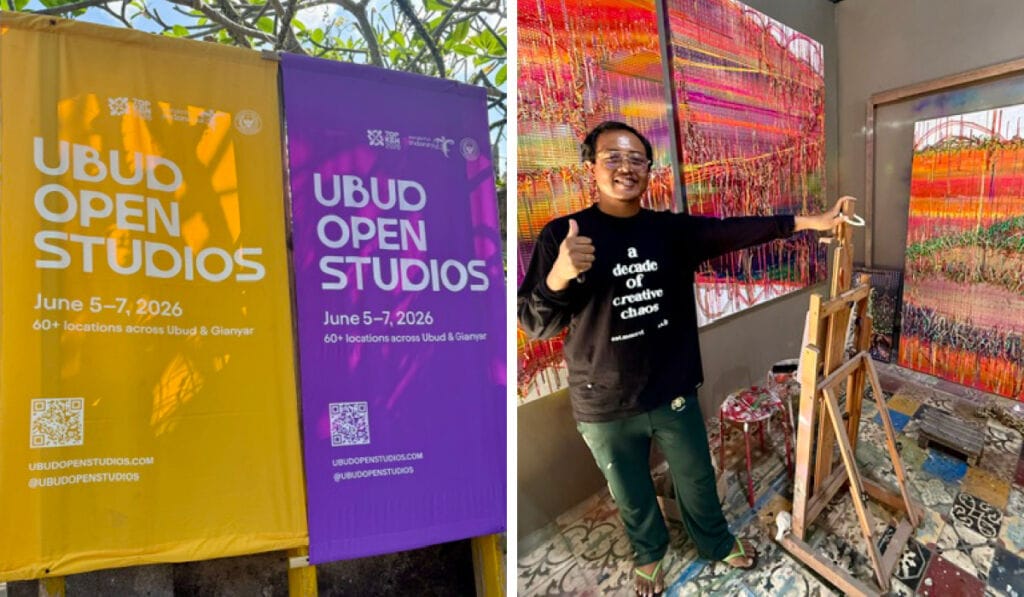
Armed with a map, a scooter and plenty of curiosity, I spent my days hopping on and off two wheels, navigating the winding roads and rice field tracks that connect more than 60 open studios scattered throughout Ubud and its surrounding villages. There was something wonderfully intrepid about it all. Each stop revealed a completely different creative world, from contemporary art spaces and graphic design studios to workshops dedicated to traditional crafts and experimental materials.
What made the experience particularly valuable was the opportunity to speak directly with the studio owners and artists themselves. Conversations flowed easily, not only with local creatives but also with designers, makers and artists visiting from around the globe. There was a shared sense of curiosity and generosity that is often difficult to replicate in more formal conference or exhibition settings.
I was especially interested in speaking with Indonesian artists who had relocated to Ubud from other parts of the archipelago, including Java. Many described being drawn to Ubud because of its long-standing reputation as a centre for creativity and artistic exchange. It was a timely reminder that while Bali is often portrayed through the lens of wellness tourism, yoga retreats and massage spas, Ubud has a much deeper and richer cultural story. For generations it has been a place where artistic talent, craftsmanship and creative experimentation have flourished.
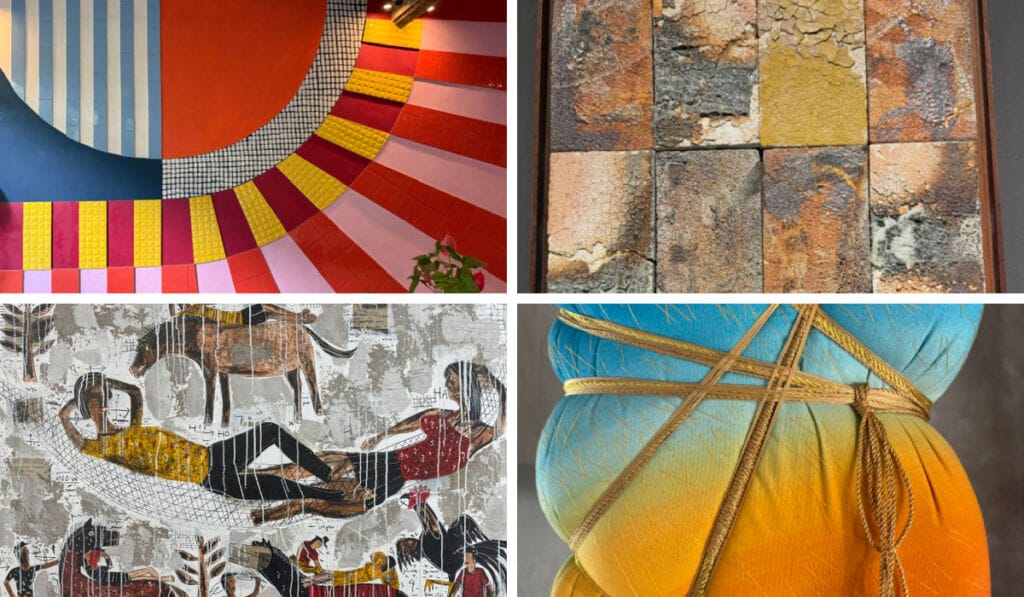
One theme that repeatedly surfaced throughout the studios was the relationship between art, design and craft. It was a conversation that echoed discussions I had only months earlier at Milan Design Week. As I moved between studios, I found myself continually asking: where exactly is the line between high-end design and craft? And perhaps more importantly, who gets to decide?
Many of the most compelling works I encountered sat comfortably in the space between these categories. Handmade processes, traditional techniques and tactile materials were not treated as secondary to contemporary design thinking; they were central to it.
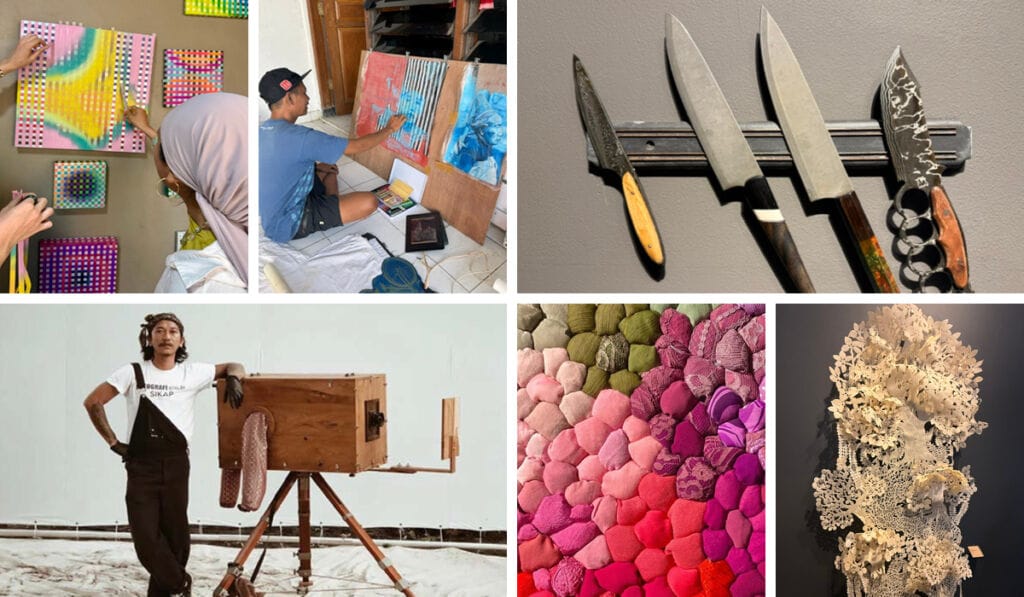
Among the standout studios was NPAAW, whose interactive artworks combine masking tape and spray paint to create immersive, participatory experiences. Watching visitors engage directly with the work challenged traditional notions of artist and audience.
I was equally captivated by the beautiful handmade paper collages of Irene Febry. Her work celebrates texture, patience and the subtle imperfections that only emerge through hand-crafted processes.
At Bagia Art Space, recycled plastics and discarded materials were transformed into striking graphic compositions, demonstrating how sustainability and aesthetic innovation can work hand in hand.
My personal favourite, however, was Gama Studio. Founder Gusti Agung is a true pioneer of Balinese digital photography and graphic arts, yet remains deeply connected to analogue methods through his handcrafted Afghan Box Camera. The juxtaposition of old and new technologies perfectly embodied the spirit of the festival itself respectful of tradition while constantly pushing creative boundaries.
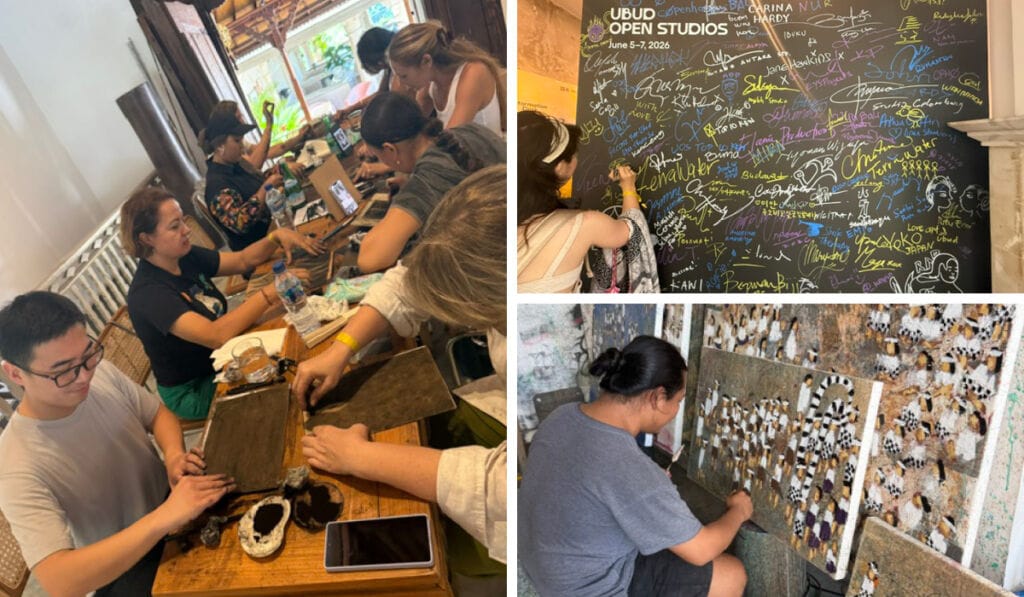
What united these studios was not simply the work on display but the experiences they offered. Many invited visitors to participate in workshops, experiment with materials and engage in hands-on making. Again and again I heard variations of the same message: slow down.
In a world increasingly dominated by screens, algorithms and relentless digital consumption, these artists were quietly advocating for something different. Through collage, photography, recycled materials, painting and craft, they encouraged visitors to reconnect with process, presence and patience. In many ways, the act of making became a form of meditation.
It’s a message that resonated deeply with me not just as a traveller, but as the co director of a creative agency working in an industry that often rewards speed and productivity above all else. The artists of Ubud reminded me that creativity doesn’t always emerge from moving faster. Sometimes the most meaningful ideas arrive when we slow down enough to notice them.
It’s a lesson that graphic designers, creative leaders and studio owners in the West would do well to remember. If you’re looking to bring more meaning, curiosity and craftsmanship into your next project, connect with Fresco Creative. We’d love to help you shape your own creative adventure.