
In March, alongside attending the PrintTech and Signage Expo 2026 at IMPACT Muang Thong Thani, I spent time exploring a very different side of Bangkok its creative district in Samphananthawong, more commonly known as Talat Noi.
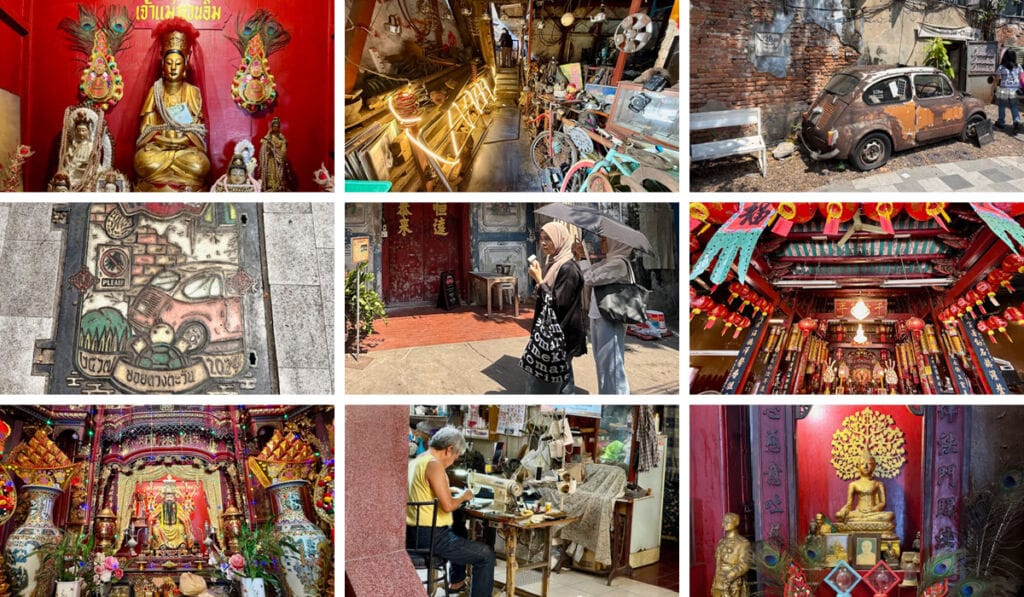
Where the Expo was about scale, machinery, and industry-wide transformation, Talat Noi was its counterpoint: intimate, layered, and deeply human. It is a neighbourhood where industrial workshops, traditional Chinese shop-houses, designer studios, art galleries, cool coffee spaces, and an extraordinary density of graphic street art coexist in a way that feels organic rather than curated. The result is a creative ecosystem that is visibly alive, messy in places, refined in others, but always in motion.
Wandering through the laneways, I visited spaces like Vanich House and Photo Hostel places that blur the line between hospitality, gallery, and studio. In one moment you might be standing in a carefully considered contemporary design space; in the next, you’re outside a functioning workshop or small manufacturing space still operating as it has for decades. Layered over all of this is a prolific amount of street art murals, painted facades, layered posters, typography, and illustrative interventions that turn entire streets into a kind of open-air design archive. It feels less like decoration and more like ongoing visual conversation.
One of the most striking observations was how seamlessly everyday life and cultural symbolism coexist. Orange-robed monks moving quietly through narrow streets would pass by designers, photographers, and artists working in nearby studios. It created a kind of visual and emotional juxtaposition that felt entirely natural, spiritual practice and creative production existing side by side without tension or separation.
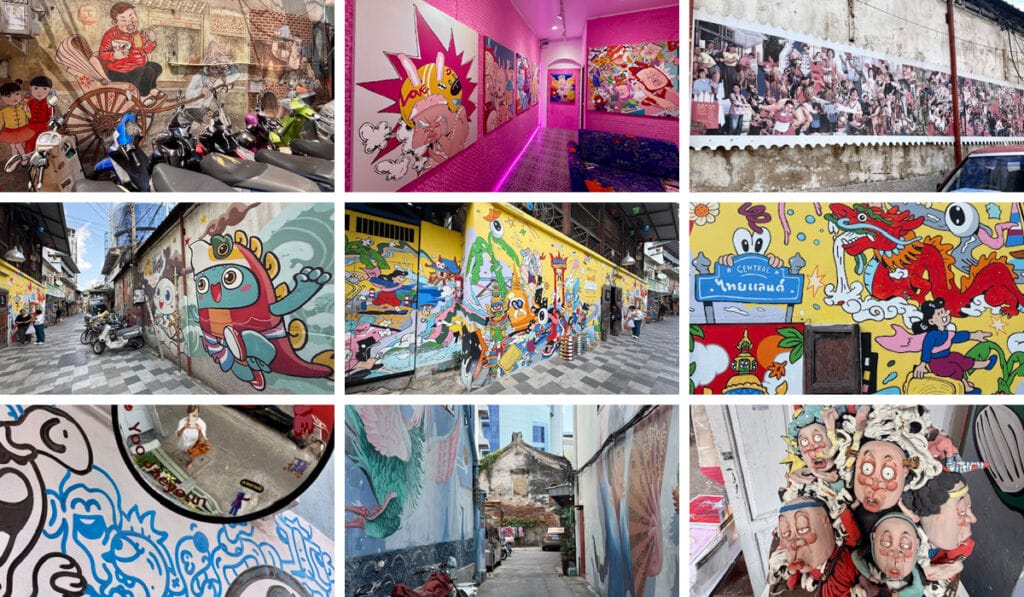
As I moved through the neighbourhood, I became increasingly aware of the design language embedded in the streets themselves. Graphic manhole covers, signage systems, layered street art, and subtle visual cues acted almost like a curated trail. Following them became its own kind of exploration, leading me deeper into laneways, past hidden courtyards, and into unexpected creative pockets. It was design at ground level, integrated into infrastructure rather than applied to it.
There was also a strong presence of Chinese cultural influence throughout the area, reflected in architecture, family-run businesses, temples, and food culture. Rather than sitting as historical remnants, these elements are actively lived-in and continue to shape the identity of the district. This blend of heritage, contemporary creative practice, and expressive street art gives the neighbourhood a richness that feels both grounded and constantly evolving.
For me, as the owner of a creative agency in Sydney, this kind of environment is incredibly instructive. It offers a different model of how creativity can exist within a city, less siloed, more porous. Studios are not isolated from production spaces, galleries are not removed from daily life, and inspiration is not something imported but something that emerges from proximity, repetition, and shared space.
It also challenges a more Western tendency toward separation between “creative work” and “real work,” between production and culture, between commerce and artistry. In Talat Noi, those boundaries are blurred. The street art alone reinforces this public-facing, accessible, constantly evolving, and deeply embedded in place rather than curated at a distance. That blurring feels increasingly relevant to how we think about our own studio practice: how we integrate design with production, how we remain connected to materiality, and how we create work that is both conceptually strong and grounded in real-world making.
More than anything, the experience reinforced the importance of place in shaping creative thinking. Bangkok’s creative districts don’t just showcase creativity, they embed it into daily life. And as I returned to Sydney, I found myself thinking less about isolated inspiration, and more about how we might foster environments, physically and culturally, where creativity can sit closer to the surface of everything we do. To find out more contact us at Fresco!