
One of the unexpected highlights of my time exploring the Ubud Open Studios was the opportunity to visit and have a tour of Bambu Indah and spend time with the team from IBUKU, the visionary design studio responsible for some of Bali’s most extraordinary bamboo architecture.
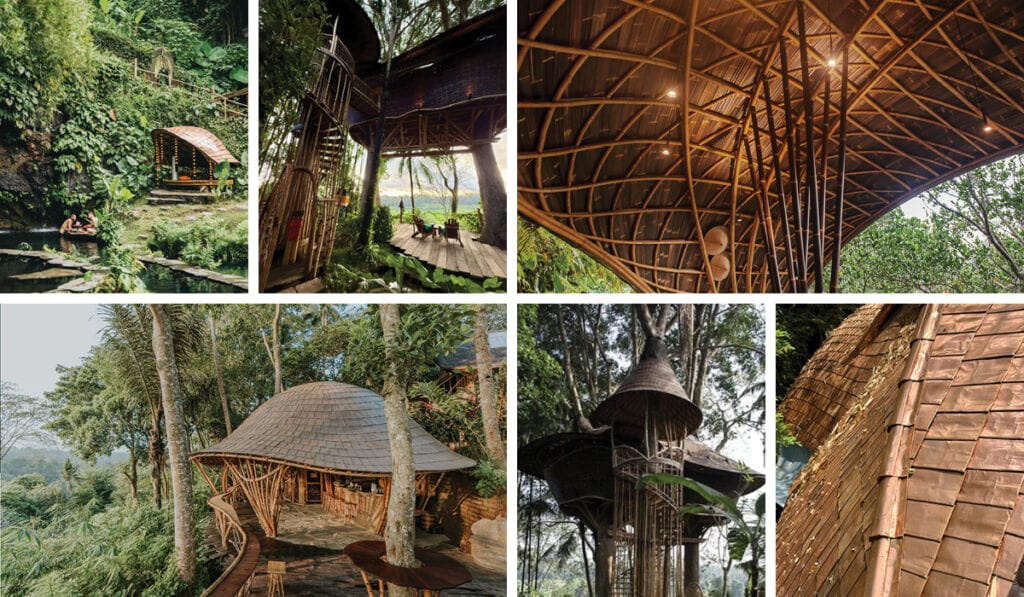
Having recently met members of the IBUKU team and toured their studio, seeing their work in its natural environment brought everything to life. What struck me immediately was that this wasn’t simply architecture it was a philosophy made tangible.
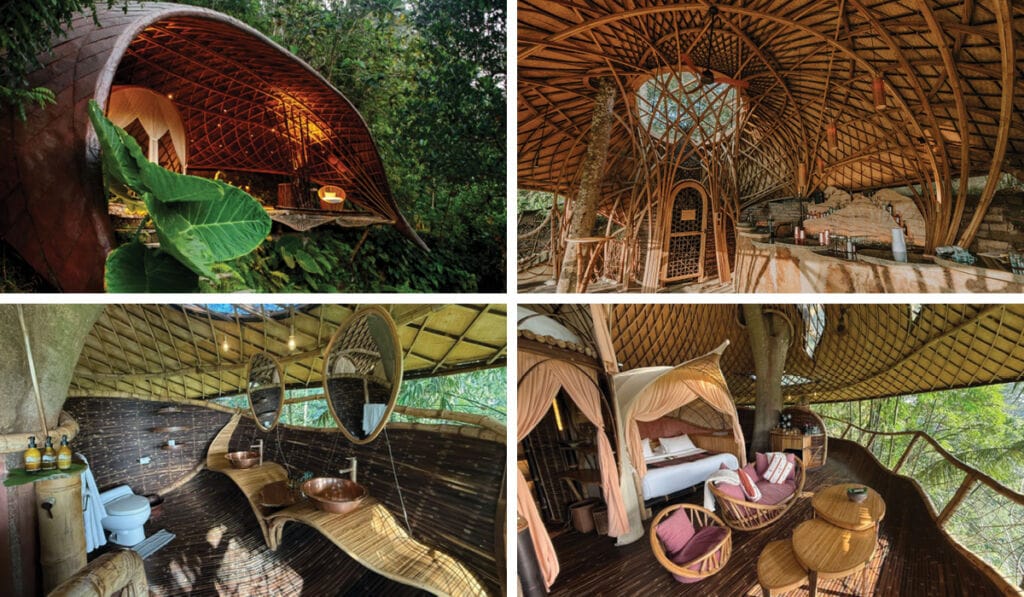
Nestled within the lush landscape of Ubud, Bambu Indah challenges almost every assumption we have about luxury, sustainability, and design. Rather than imposing structures upon the environment, the buildings seem to emerge from it, growing organically from the land itself. Bamboo, often dismissed as a humble material, is transformed into soaring architectural forms that feel both futuristic and deeply connected to nature.
The property is filled with remarkable examples of innovative design. The iconic Moon House appears almost sculptural, blurring the boundary between shelter and art installation. The Tree House quickly became my personal favourite, suspended amongst the greenery and offering a perspective that reconnects visitors with the landscape in a way conventional architecture rarely achieves.
What impressed me most was the attention to every detail. Copper hot tubs sit harmoniously within the environment, their warm patina complementing the natural surroundings. Mud-brick saunas showcase how ancient building techniques can be reimagined through a contemporary lens. Throughout the property there is a constant dialogue between craftsmanship, sustainability, and beauty.
As someone who runs a graphic design agency, I found myself reflecting on how closely these principles align with great design in any medium. At first glance, architecture and graphic design may seem worlds apart, but both disciplines are fundamentally about creating experiences.
The best graphic design doesn’t simply communicate information it shapes how people feel, move, interact, and connect with a story. The same is true at Bambu Indah. Every pathway, structure, material, and viewpoint has been thoughtfully considered to create an emotional response. The architecture becomes a narrative that unfolds as you move through the space.
What IBUKU demonstrates so brilliantly is the power of having a clear vision and executing it consistently across every touchpoint. Their work reminds me that great creative direction is not about following trends but about creating a cohesive world built upon strong values and a distinctive point of view.
The experience reinforced something I often discuss with our team: innovation happens when creativity and constraints work together. IBUKU’s commitment to sustainability is not a limitation it is the catalyst for some of their most imaginative solutions. In many ways, this mirrors the creative process in branding and graphic design, where the strongest ideas often emerge from working within a defined framework.
Leaving Bambu Indah, I felt both inspired and challenged. Inspired by the sheer ambition and originality of the work, and challenged to think more boldly about how design can create deeper connections between people, place, and purpose.
For any creative professional visiting Bali, Bambu Indah offers far more than beautiful accommodation. It is a masterclass in visionary thinking, storytelling through design, and the transformative potential of creativity when guided by a strong philosophy.
It is a reminder that truly exceptional design doesn’t just solve problems – it changes the way we see the world. Start your next creative chapter with a team that understands how to turn philosophy into powerful visual storytelling.