
There’s something about Milan Design Week, and in particular Fuorisalone, that resists being neatly summarised. It spills out of exhibition halls and into courtyards, laneways, apartments and gardens, turning the city into a living, breathing expression of design thinking. This year, I based myself in Brera, where creativity feels embedded in the architecture itself, and spent my days moving between installations that blurred the line between design, product, and experience.
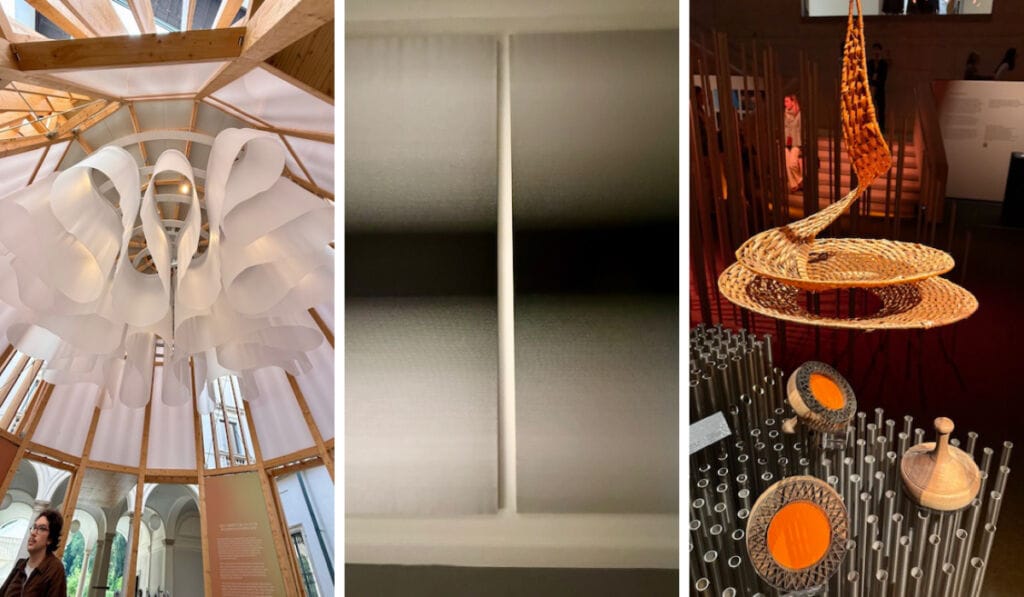
One of the most quietly affecting pieces I encountered was When Apricots Blossom. It wasn’t loud or attention seeking, but instead invited stillness. The installation spoke to transience and renewal, ideas expressed through delicate material choices and restrained colour. As someone running a creative agency, it was a reminder that not everything needs to shout to be heard. There’s real power in subtlety, in allowing space for an audience to feel rather than be told.
In contrast, Balanced Principles (Visions of Wegner) offered a masterclass in clarity and legacy. Rooted in the philosophy of Hans J. Wegner, the installation explored proportion, craftsmanship and the enduring relevance of thoughtful design systems. It reinforced something I often come back to in branding: when the underlying principles are strong, the output becomes timeless. Trends may shift, but structure holds.
At Material Anthology by Tacchini, the focus shifted to tactility and narrative through material. Each piece felt like a study in how texture, weight and finish can carry meaning. In a world where so much of our work is increasingly digital, it was a grounding reminder of the sensory dimension of design. It made me think about how we might translate that richness into brand experiences through print finishes, packaging, or even the way a digital interface feels to navigate.
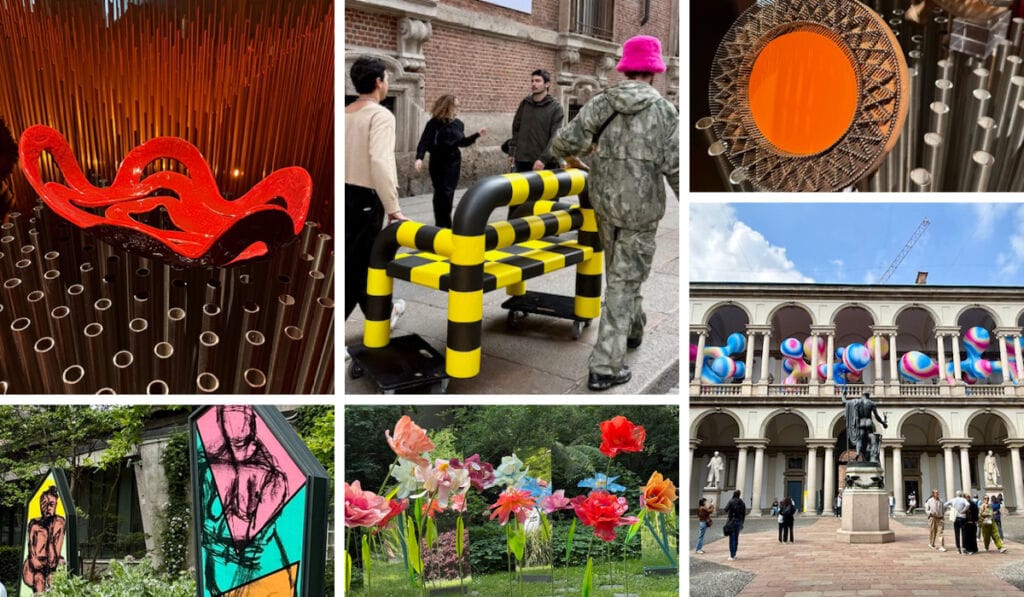
Then there was Wave Weave, a more immersive and sculptural work that played with movement, light and rhythm. Walking through it, I was struck by how design can guide behaviour without instruction, how form alone can slow you down, redirect you, or draw your attention. This is something we constantly aim for in wayfinding, exhibition design, and even digital UX, creating intuitive journeys rather than explicit directions.
Beyond these named installations, some of the most memorable moments happened in the gardens of Brera Botanical Garden and the surrounding streets. Sculptural works appeared almost unexpectedly, nestled among greenery or tucked into historic courtyards, creating a dialogue between old and new. These pieces didn’t demand attention, they rewarded curiosity. In an increasingly saturated visual landscape, perhaps the most effective work is that which invites discovery rather than demands it.
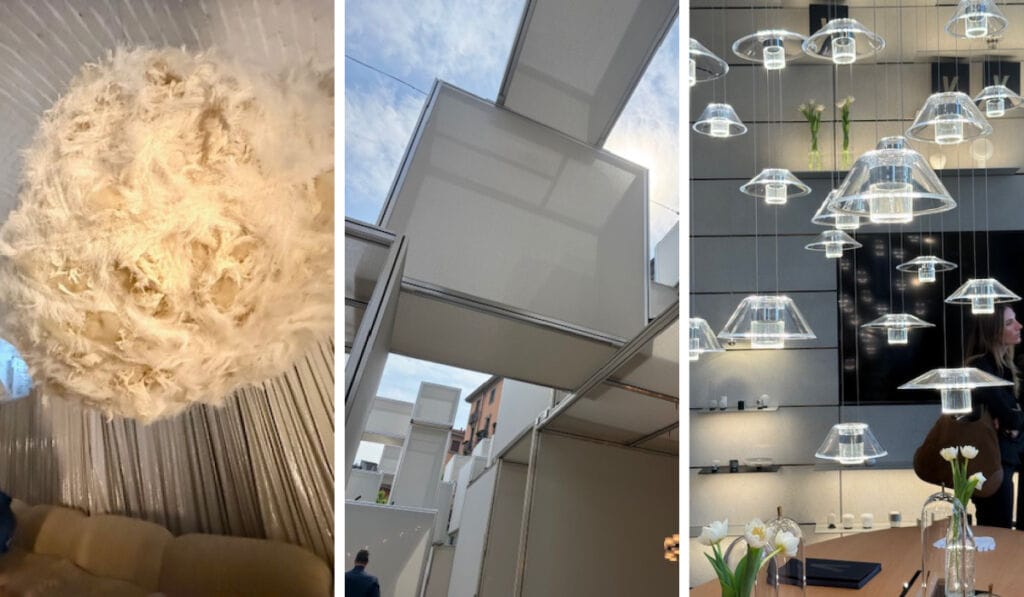
What I took away from Fuorisalone this year wasn’t just inspiration at a surface level, but a deeper recalibration. As a creative agency owner in Sydney, it reinforced the importance of designing with intention, of building strong conceptual foundations, embracing restraint where needed, and thinking beyond the purely visual into the experiential.
It also highlighted the value of stepping outside our immediate context. Being immersed in a city where design is treated as culture, not just commerce, creates a different standard. It challenges you to think more holistically, to consider not just how something looks, but how it lives in the world.
And perhaps most importantly, it reminded me why this work matters. Good design doesn’t just communicate, it shapes how people feel, move, and connect. Milan, in all its layered, expressive complexity, is proof of that. Contact us today to find out more.